How Long Until a Tooth Infection Kills You? Timeline, Warning Signs, and Treatment
Tooth pain is one of the most uncomfortable health problems people experience. Many individuals ignore dental pain for weeks or months, assuming it will disappear on its own. However, untreated dental infections can become serious and, in rare situations, life-threatening.
A common concern people search online is: How long until a tooth infection kills you?
While death from a tooth infection is rare today due to modern dentistry and antibiotics, the infection can become dangerous if ignored for too long. Understanding the timeline, symptoms, and treatment options can help prevent serious complications.
This guide explains how tooth infections develop, how quickly they can spread, warning signs to watch for, and when to seek emergency medical care.
Quick Answer: How Long Until a Tooth Infection Kills You?
In most cases, a tooth infection does not kill someone quickly. An untreated dental infection usually develops over weeks or months before becoming life-threatening.
However, once the infection spreads beyond the tooth into surrounding tissues, the bloodstream, or the brain, serious complications can develop within days.
Modern medical treatment makes death extremely rare. Most people recover completely when they receive prompt dental care such as antibiotics, root canal treatment, or tooth extraction.
What Is a Tooth Infection?
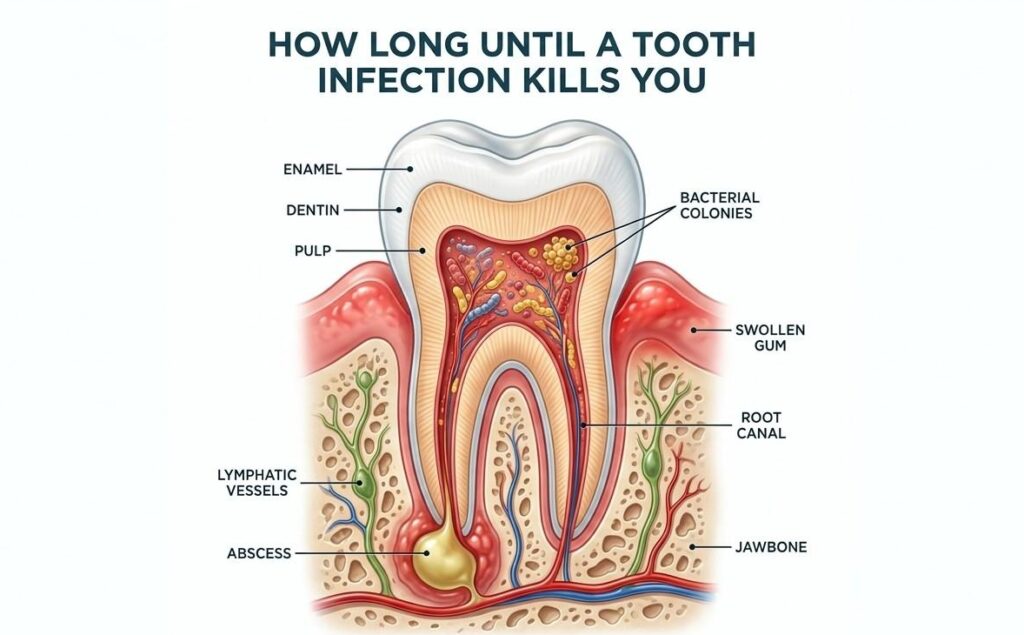
A tooth infection occurs when bacteria enter the inner part of the tooth and multiply, leading to inflammation and pus formation.
Inside every tooth is a soft tissue called pulp, which contains nerves and blood vessels. When bacteria invade this area, the infection can spread deeper into the jawbone and surrounding tissues.
Common terms used by dentists include:
- Dental infection
- Tooth abscess
- Pulp infection
Without treatment, the infection can move beyond the tooth and affect other parts of the body.
What Is a Dental Abscess?
A dental abscess is a pocket of pus caused by a bacterial infection. It usually forms at the root of a tooth or within the gums.
Abscesses occur when bacteria multiply rapidly, and the body’s immune system responds by sending white blood cells to fight the infection. This process creates pus, swelling, and intense pain.
Types of Tooth Abscess
Dentists usually classify dental abscesses into three types:
1. Periapical abscess
- Occurs at the tip of the tooth root
- Often caused by untreated cavities
2. Periodontal abscess
- Forms in the gums near the tooth root
- Usually related to gum disease
3. Gingival abscess
- Develops in gum tissue
- Often caused by food particles or injuries
All three types can become dangerous if not treated properly.
How Bacteria Enter the Tooth
Several dental problems allow bacteria to reach the pulp inside a tooth.
The most common causes include:
- Untreated tooth decay
- Cracked or broken teeth
- Severe gum disease
- Dental trauma
- Poor oral hygiene
According to the World Health Organization (WHO), untreated tooth decay affects nearly 2.5 billion people worldwide, making dental infections a common health issue.
When bacteria reach the pulp, the infection begins to spread rapidly.
How a Tooth Infection Becomes Dangerous
A dental infection usually starts locally but can spread if left untreated.
Understanding the stages helps explain how it may become life-threatening.
Stage 1: Tooth Decay and Pulp Infection
At the beginning, bacteria enter the tooth through a cavity or crack.
Symptoms may include:
- Mild toothache
- Sensitivity to hot or cold
- Occasional discomfort while chewing
At this stage, treatment is simple and usually involves filling the cavity or performing a root canal.
Stage 2: Abscess Formation
If the infection reaches the pulp, pus begins to accumulate at the tooth root.
Common symptoms include:
- Severe tooth pain
- Swelling around the tooth
- Bad taste in the mouth
- Gum redness
Pain often becomes constant and throbbing.
Stage 3: Infection Spreads to Nearby Tissues
If untreated, the infection may spread into nearby areas such as:
- Jawbone
- Face
- Neck
This stage may cause visible facial swelling and increased pain.
Stage 4: Systemic Infection
In rare cases, bacteria enter the bloodstream and spread throughout the body.
This can lead to dangerous complications such as:
- Sepsis
- Brain abscess
- Airway blockage
At this stage, emergency medical care is required.
Tooth Infection Timeline: How Fast Can It Become Fatal?
The timeline varies depending on the person’s health, immune system, and severity of infection.
Below is a general progression dentists observe.
Days 1–3: Early Infection
Symptoms may include:
- Tooth sensitivity
- Mild pain
- Gum irritation
Many people ignore these early warning signs.
Days 3–7: Infection Worsens
Bacteria continue to multiply, leading to:
- Persistent tooth pain
- Swelling around the tooth
- Formation of an abscess
Pain becomes more noticeable during chewing or drinking hot beverages.
Weeks 1–3: Severe Infection
The infection may spread to surrounding tissues.
Possible symptoms include:
- Facial swelling
- Fever
- Enlarged lymph nodes
- Bad breath
Dental treatment is urgently needed at this stage.
Weeks to Months: Risk of Complications
If the infection spreads further, serious complications may develop.
Possible conditions include:
- Blood infection (sepsis)
- Brain infection
- Airway blockage
Although this stage is rare, it can be life-threatening.
Maintaining healthy teeth and gums requires consistent oral hygiene and regular professional care. Preventive dental treatments can help identify small issues before they turn into serious and expensive problems. From routine cleanings to advanced cosmetic procedures, modern dentistry provides effective solutions for improving both oral health and smile appearance. Taking proper care of your teeth not only improves confidence but also supports long-term overall wellness. Discover more about professional dental care and smile solutions here: https://brasssmiledental.com/
Can a Tooth Infection Kill You Overnight?
Sudden death from a tooth infection is extremely rare.
Most infections take weeks or months to progress to a dangerous stage.
However, certain complications can develop rapidly, including:
- Severe swelling that blocks the airway
- Infection spreading into the bloodstream
- Brain infections
When these complications occur, symptoms may worsen quickly within 24 to 48 hours.
That is why dentists recommend seeking treatment as soon as severe pain or swelling appears.
How a Tooth Infection Spreads Through the Body
Dental infections may travel through several pathways inside the body.
Understanding these pathways explains why untreated infections can become dangerous.
Spread to the Jaw
Infections often spread first to the jawbone, causing a condition called osteomyelitis.
Symptoms include:
- Jaw pain
- Fever
- Swelling
Spread to Facial Tissues
Bacteria can move into the soft tissues of the face.
This may cause:
- Facial swelling
- Eye swelling
- Difficulty opening the mouth
Spread to the Neck
Some infections reach the neck and throat area, creating a dangerous condition called Ludwig’s angina.
This infection can cause swelling that blocks the airway.
Symptoms include:
- Difficulty breathing
- Trouble swallowing
- Severe neck swelling
Spread to the Brain
In rare cases, bacteria travel through blood vessels and infect the brain.
A brain abscess may develop, causing:
- Severe headaches
- Vision problems
- Confusion
This condition requires immediate medical treatment.
Spread to the Bloodstream
When bacteria enter the bloodstream, it can cause sepsis.
Sepsis is a life-threatening immune response that can damage organs.
According to the Centers for Disease Control and Prevention (CDC), sepsis causes approximately 1 in 3 hospital deaths in the United States.
Life-Threatening Complications of Tooth Infections
Although rare, untreated dental infections can lead to serious medical conditions.
Sepsis
Sepsis occurs when infection spreads throughout the body.
Symptoms may include:
- High fever
- Rapid heart rate
- Difficulty breathing
- Confusion
Sepsis requires immediate hospitalization.
Ludwig’s Angina
This severe infection affects the floor of the mouth and neck.
It can cause dangerous airway swelling.
Symptoms include:
- Drooling
- Difficulty swallowing
- Severe neck swelling
Brain Abscess
A brain abscess is a pocket of infection in the brain.
Symptoms may include:
- Severe headaches
- Vomiting
- Neurological problems
This condition requires urgent surgery and antibiotics.
Cavernous Sinus Thrombosis
This rare condition occurs when infection spreads to a blood vessel near the brain.
Symptoms may include:
- Eye swelling
- Vision problems
- Severe headaches
Signs a Tooth Infection Is Becoming Dangerous
Certain symptoms indicate that a dental infection may be spreading.
Anyone experiencing these symptoms should seek medical care immediately.
Warning Signs
- High fever
- Facial swelling
- Difficulty breathing
- Trouble swallowing
- Severe headache
- Confusion
- Rapid heartbeat
These symptoms suggest the infection may have spread beyond the tooth.
When to Go to the Emergency Room for a Tooth Infection
Most tooth infections can be treated by a dentist.
However, emergency care may be necessary if severe symptoms appear.
Go to the ER if you experience:
- Difficulty breathing
- Severe swelling in the face or neck
- Fever above 101°F (38.3°C)
- Trouble swallowing
- Persistent vomiting
These symptoms may indicate a serious infection requiring immediate treatment.
How Dentists Treat Tooth Infections
Modern dentistry offers several effective treatments for dental infections.
Antibiotics
Dentists often prescribe antibiotics to control bacterial growth.
Common antibiotics include:
- Amoxicillin
- Clindamycin
- Metronidazole
Antibiotics help stop the infection from spreading.
Root Canal Treatment
A root canal removes infected pulp inside the tooth.
The dentist:
- Cleans the infected area
- Removes bacteria
- Seals the tooth
Root canals often save the natural tooth.
Tooth Extraction
If the tooth is severely damaged, the dentist may remove it completely.
This prevents the infection from spreading further.
Abscess Drainage
Dentists may drain the abscess to release pus and relieve pressure.
This procedure reduces pain and speeds healing.
Can Antibiotics Cure a Tooth Infection Alone?
Antibiotics can control bacterial growth, but they usually do not eliminate the source of infection.
The infected pulp remains inside the tooth unless treated.
Therefore, dentists usually recommend:
- Root canal treatment
or - Tooth extraction
Without removing the infection source, the problem often returns.
Who Is at Higher Risk of Severe Tooth Infection?
Some people are more vulnerable to complications.
Higher-risk groups include:
- People with diabetes
- Individuals with weakened immune systems
- Older adults
- People who delay dental treatment
These individuals should seek treatment as soon as symptoms appear.
How to Prevent Tooth Infections
Preventing dental infections is much easier than treating them.
Simple habits can protect oral health.
Maintain Good Oral Hygiene
Dentists recommend:
- Brushing teeth twice daily
- Flossing once per day
- Using antibacterial mouthwash
Visit the Dentist Regularly
Routine dental checkups help detect problems early.
Most dentists recommend visiting every 6 months.
Treat Cavities Early
Small cavities can quickly become infections.
Early treatment prevents serious complications.
Avoid Ignoring Tooth Pain
Persistent tooth pain is a warning sign.
Anyone experiencing pain lasting more than 48 hours should visit a dentist.
Real Cases of Tooth Infection Death
Although rare today, historical records show cases where dental infections became fatal.
Before modern antibiotics, tooth infections frequently led to serious illness.
Even in modern times, rare cases still occur when infections remain untreated for long periods.
These cases highlight the importance of prompt dental care.
Frequently Asked Questions
Can a tooth infection kill you if untreated?
Yes, but it is rare. Untreated infections can spread to the bloodstream or brain, causing life-threatening complications such as sepsis.
How long can you live with a tooth infection?
Many people live with dental infections for weeks or months, but the infection may worsen over time and eventually become dangerous.
What are the signs a tooth infection is spreading?
Common signs include fever, facial swelling, difficulty breathing, neck swelling, and severe headaches.
Can a tooth infection spread to the brain?
Yes. In rare cases, bacteria can travel through blood vessels and cause a brain abscess.
What happens if a tooth abscess bursts?
When an abscess bursts, pus drains into the mouth. Pain may temporarily improve, but dental treatment is still required to eliminate the infection.
Key Takeaways
Tooth infections are common dental problems that usually develop slowly.
Most infections do not become life-threatening, especially when treated early. However, ignoring symptoms for too long can allow bacteria to spread to other parts of the body.
Important points to remember:
- Untreated tooth infections can take weeks or months to become dangerous
- Severe complications can develop quickly once the infection spreads
- Early dental treatment prevents almost all serious outcomes
- Warning symptoms such as fever, facial swelling, and breathing difficulty require urgent medical care
The best protection against dental infections is good oral hygiene and regular dental checkups.
Seeking treatment early ensures that a simple dental problem never becomes a serious health risk.