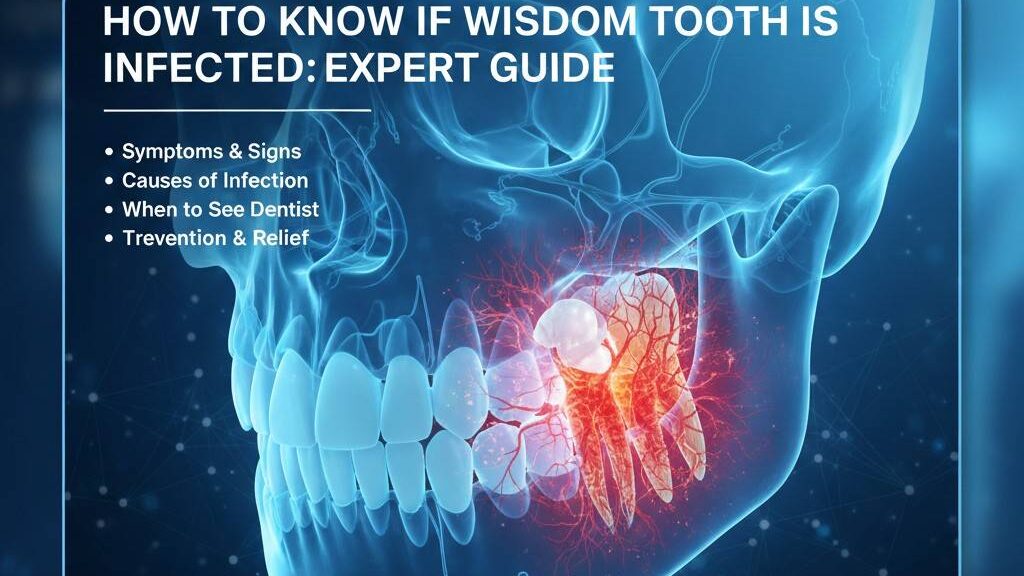
How to Know If Wisdom Tooth Is Infected: Expert Guide
Wisdom teeth can cause more trouble than any other teeth in your mouth. If you’re dealing with jaw pain, swelling, or bad breath, you may be asking yourself how to know if wisdom tooth is infected before the problem gets worse.
Infection around a wisdom tooth is common in adults across the United States, especially between ages 17 and 30. Because these molars often erupt partially or grow sideways, bacteria can easily get trapped beneath the gum tissue. Recognizing early symptoms can prevent serious complications such as abscess formation or spreading infection.
This expert guide explains the warning signs, risk factors, diagnosis process, and treatment options in simple, clear American English—so you can make confident decisions about your oral health.
Why Wisdom Teeth Get Infected
Wisdom teeth (third molars) are the last teeth to erupt. Many people simply don’t have enough space in their jaw.
When a wisdom tooth is:
- Partially erupted
- Impacted (stuck under the gum or bone)
- Growing at an angle
- Difficult to clean
It creates a pocket where food particles and bacteria accumulate. This often leads to a condition called pericoronitis, which is inflammation and infection of the gum tissue around a partially erupted molar.
According to the American Dental Association, impacted wisdom teeth are one of the most common causes of localized gum infections in young adults.
Early Signs: How to Know If Wisdom Tooth Is Infected
Recognizing symptoms early can prevent emergency situations. Here’s what to watch for:
1. Persistent Throbbing Pain
Pain is usually the first warning sign. It may:
- Radiate toward your ear or throat
- Worsen when chewing
- Feel sharp or pressure-like
Unlike normal eruption discomfort, infected pain doesn’t improve after a few days.
2. Swollen or Red Gums
Inflamed gum tissue around the back molar is a strong indicator. You may notice:
- Puffy gum flap over the tooth
- Tenderness when touched
- Bleeding during brushing
3. Bad Breath or Bad Taste
Bacteria trapped under the gum flap release toxins. This can cause:
- Persistent bad breath
- A foul taste that doesn’t go away
4. Jaw Stiffness
Difficulty opening your mouth (called trismus) can signal spreading inflammation.
5. Facial Swelling
Swelling along the jawline or cheek suggests deeper infection and requires immediate care.
If you’re wondering how to know if wisdom tooth is infected versus just irritated, swelling combined with worsening pain is a major red flag.
Advanced Warning Signs (Seek Urgent Care)
An untreated infection can spread beyond the tooth. Seek emergency dental care if you notice:
- Fever over 100.4°F
- Difficulty swallowing
- Trouble breathing
- Swelling under the eye or neck
- Pus discharge
The Mayo Clinic warns that oral infections can spread to deeper tissues if not treated promptly.
Infected vs. Normal Wisdom Tooth Pain
| Symptom | Normal Eruption | Infection |
|---|---|---|
| Duration | 1–3 days | More than 3–5 days |
| Swelling | Mild | Moderate to severe |
| Fever | No | Possible |
| Bad taste | Rare | Common |
| Jaw stiffness | No | Often present |
This comparison can help clarify how to know if wisdom tooth is infected instead of simply erupting.
Causes of Wisdom Tooth Infection
Understanding the cause helps prevent recurrence.
Partial Eruption
The gum flap (operculum) traps debris.
Impacted Position
Sideways growth creates tight cleaning spaces.
Poor Oral Hygiene
Back molars are harder to brush and floss properly.
Food Impaction
Small food particles get stuck easily.
Weakened Immune System
Stress, illness, or uncontrolled diabetes increases infection risk.
How Dentists Diagnose Infection
If you suspect a problem, a dentist will:
- Perform a visual exam
- Check gum swelling and tenderness
- Take dental X-rays
- Evaluate bite alignment
- Look for pus or abscess formation
X-rays are especially helpful in confirming impaction and determining how to know if wisdom tooth is infected below the gum line.
Treatment Options in the USA
Treatment depends on severity.
1. Antibiotics
Prescribed for spreading or moderate infection.
Common antibiotics:
- Amoxicillin
- Clindamycin (if allergic to penicillin)
2. Professional Cleaning
Flushing debris from under the gum flap.
3. Pain Management
- Ibuprofen
- Warm saltwater rinses
4. Wisdom Tooth Extraction
Most definitive solution if infection recurs.
In the U.S., extraction costs range from $250–$600 per tooth without insurance, depending on complexity.
At-Home Care While Waiting for Appointment
These steps can help temporarily:
- Warm saltwater rinses (3–4 times daily)
- Gentle brushing with soft-bristled toothbrush
- Avoid chewing on affected side
- Cold compress for swelling
However, home care does not cure infection. If symptoms persist, professional treatment is necessary.
Risks of Ignoring an Infected Wisdom Tooth
Untreated infections may lead to:
- Dental abscess
- Bone infection
- Spread to neck spaces
- Hospitalization in severe cases
Understanding how to know if wisdom tooth is infected early helps avoid these serious complications.
Prevention Tips for Long-Term Oral Health
Maintain Strong Oral Hygiene
- Brush twice daily
- Floss carefully behind molars
- Use antimicrobial mouthwash
Schedule Regular Dental Checkups
Routine exams catch early inflammation before it becomes severe.
Consider Early Evaluation
Some dentists recommend preventive removal if wisdom teeth are likely to cause future problems.
Internal Link Suggestions
- Link to: “Signs You Need a Tooth Extraction”
- Link to: “How to Relieve Tooth Pain at Home Safely”
- Link to: “What Is an Impacted Wisdom Tooth?”
External Reference Suggestions
- American Dental Association – Wisdom Teeth Information
- Centers for Disease Control and Prevention – Oral Health Basics
Frequently Asked Questions (FAQs)
1. How long can a wisdom tooth infection last?
Without treatment, it can last weeks and may worsen. Antibiotics usually improve symptoms within 2–3 days.
2. Can a wisdom tooth infection go away on its own?
Mild irritation may improve, but true infection rarely resolves without professional care.
3. What does infected wisdom tooth pain feel like?
It’s usually throbbing, radiating, and accompanied by swelling or bad taste.
4. Is fever common with wisdom tooth infection?
Yes, especially if infection spreads beyond the gum tissue.
5. Should all infected wisdom teeth be removed?
Not always, but recurrent infections typically require extraction.
Conclusion
Knowing how to know if wisdom tooth is infected can prevent serious health complications and unnecessary suffering. Watch for persistent pain, swelling, bad breath, jaw stiffness, and fever. While home remedies may ease discomfort temporarily, professional evaluation is essential for proper diagnosis and treatment.
If symptoms worsen or spread, seek dental care immediately. Early action protects not just your tooth, but your overall health.