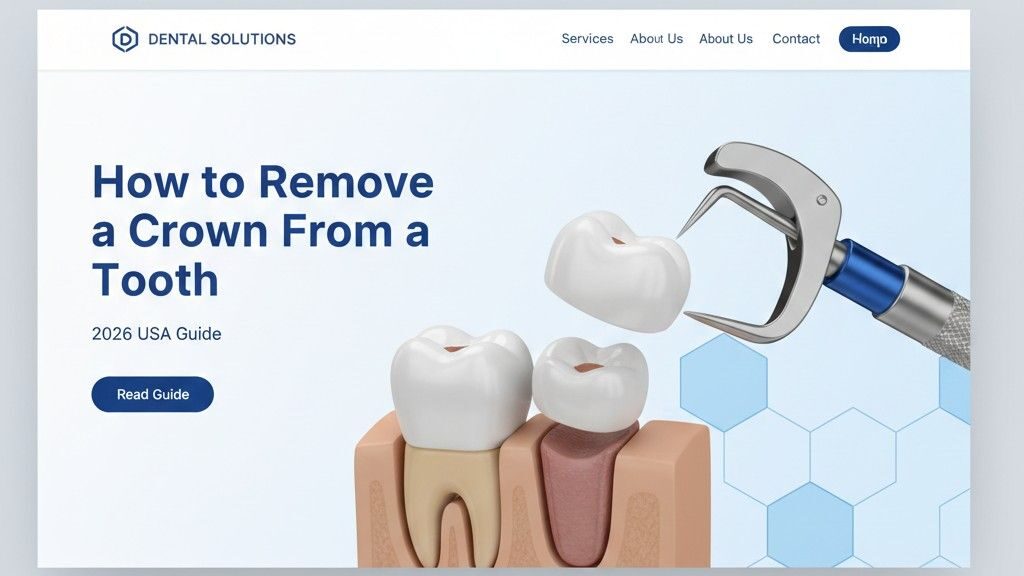
How to Remove a Crown From a Tooth (2026 USA Guide)
If you’re searching for how to remove a crown from a tooth, you may have a loose, damaged, or painful dental crown. While some crowns fall off naturally, forcing one off at home can seriously damage the tooth underneath.
This USA-focused 2026 guide explains what is safe, what is risky, and what dentists recommend.
Can You Remove a Crown Yourself?
In most cases, you should not forcefully remove a dental crown at home.
According to the American Dental Association, dental crowns are cemented to protect weakened teeth. Pulling or prying them off can:
- Crack the underlying tooth
- Expose sensitive dentin or nerve
- Cause bleeding
- Increase infection risk
Crowns are often placed on teeth that are already structurally reduced. That makes them more vulnerable if handled improperly.
When a Crown Comes Off Naturally
A crown may loosen due to:
- Cement breakdown
- Tooth decay under the crown
- Teeth grinding (bruxism)
- Trauma or biting hard food
If the crown lifts off easily without force and there is no pain, it is usually not an emergency. However, the tooth should be evaluated quickly to prevent damage.
What You Can Safely Do at Home
If the crown is already loose:
1. Remove It Only If It Slides Off Easily
If it comes off with gentle finger pressure, you may remove it carefully.
Do not twist, pull hard, or use tools.
2. Rinse and Store It
Rinse the crown gently with clean water. Keep it in a small container.
3. Protect the Tooth
You may use temporary dental cement from a pharmacy to cover the tooth until you see a dentist.
Avoid chewing on that side.
What You Should NEVER Do
Do NOT:
- Use pliers, tweezers, or sharp tools
- Break the crown intentionally
- Use super glue or household adhesives
- Ignore swelling or severe pain
The Centers for Disease Control and Prevention notes that untreated dental exposure can increase risk of infection spreading to surrounding tissues.
Maintaining good oral hygiene is essential for healthy teeth, fresh breath, and long-term dental wellness. Regular dental checkups, professional cleanings, and preventive care can help avoid serious oral health problems before they become costly or painful. Modern dentistry also offers advanced cosmetic and restorative treatments that improve both appearance and confidence. Learn more about professional dental care and smile improvement solutions here: https://brasssmiledental.com/ and explore advanced treatments and preventive dental services here: https://brasssmiledental.com/services/
Why DIY Crown Removal Is Risky
Under a crown, the tooth may be:
- Filed down
- Root canal treated
- Structurally fragile
- Close to nerve tissue
Improper removal can lead to:
- Tooth fracture
- Gum trauma
- Bacterial contamination
- Need for extraction
Professional tools are designed to safely break the cement seal without damaging the tooth.
Signs You Need Immediate Dental Care
Seek urgent care if you experience:
- Severe throbbing pain
- Facial swelling
- Fever
- Pus or bad taste
- Crown cracked in half
These symptoms may indicate infection or deeper tooth damage.
How Dentists Remove Crowns Safely
Dentists use specialized crown-removal instruments that:
- Gently loosen cement
- Protect remaining tooth structure
- Preserve crown if reusable
- Allow proper inspection for decay
The process is typically quick and comfortable, often without significant discomfort.
Can a Crown Be Reused?
Sometimes yes — if:
- It is not cracked
- There is no decay underneath
- It fits properly
If damage or decay is present, a new crown may be necessary.
How to Prevent Crown Problems
To reduce the risk of future crown loosening:
- Brush twice daily
- Floss around crown margins
- Avoid chewing ice
- Wear a nightguard if grinding
- Attend regular dental checkups
Most crowns last 10–15 years with proper care.
Conclusion
If you’re wondering how to remove a crown from a tooth, the safest approach is to avoid forceful DIY removal.
If the crown is already loose, you may gently remove it without tools. However, pulling or prying can crack the underlying tooth and cause infection.
Schedule a dental visit as soon as possible to ensure the tooth is protected and properly restored. Early care prevents more serious complications.
FAQ
1. Can I pull off my own crown?
Only if it is completely loose and slides off without force.
2. Is a loose crown an emergency?
Not always, but it should be evaluated within a few days.
3. Can I glue my crown back on?
Only temporary dental cement should be used — never household glue.
4. Why does my crowned tooth hurt?
Pain may signal decay, infection, or bite issues.
5. How quickly should I see a dentist?
As soon as possible — immediately if there is pain or swelling.