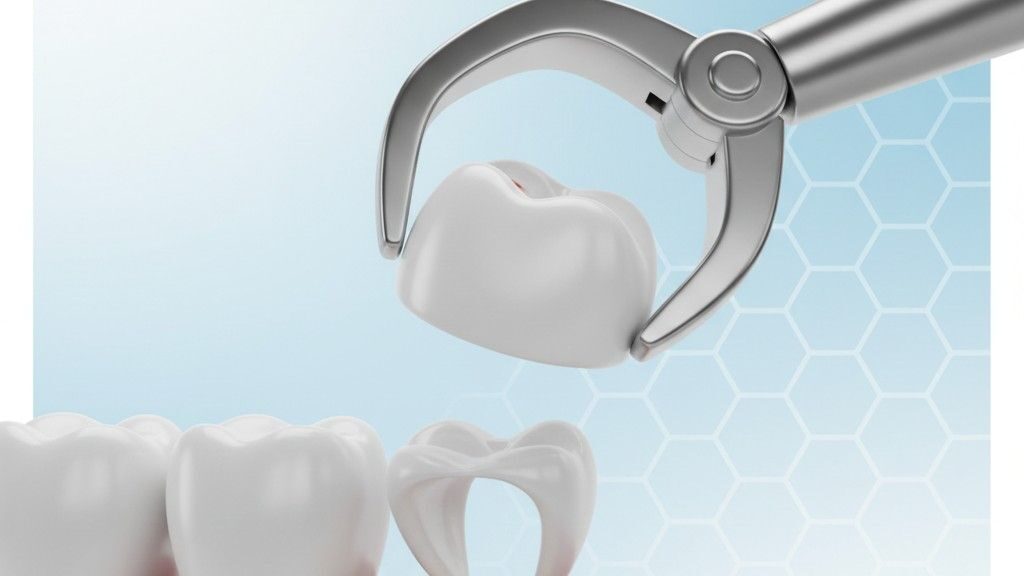
How to Remove a Tooth Crown (2026 USA Guide)
If you’re searching for how to remove a tooth crown, you may have a loose, damaged, or painful crown. While some crowns fall off naturally, removing one yourself can damage the tooth underneath.
This guide explains what is safe, what is not, and what dentists recommend in the United States.
Can You Remove a Tooth Crown at Home?
In most cases, you should not forcefully remove a dental crown at home.
According to the American Dental Association, crowns are cemented securely to protect the tooth. Pulling or prying them off can:
- Crack the underlying tooth
- Expose the nerve
- Cause infection
- Lead to severe pain
When a Crown Falls Off Naturally
Sometimes a crown becomes loose due to:
- Worn-out cement
- Decay under the crown
- Teeth grinding
- Trauma
If it comes off on its own and there is no pain, this is usually not an emergency — but you should see a dentist as soon as possible.
What You Can Safely Do
If your crown is loose:
1. Remove It Gently (Only If Already Loose)
If it lifts off easily without force, you may remove it carefully with clean hands.
Do NOT twist or pull aggressively.
2. Clean the Crown
Rinse it gently with water. Do not scrub aggressively.
3. Protect the Tooth
You can use temporary dental cement from a pharmacy to reseat the crown temporarily.
Avoid chewing on that side.
What You Should NEVER Do
Do NOT:
- Use pliers or sharp tools
- Break the crown intentionally
- Use super glue
- Ignore pain or swelling
The Centers for Disease Control and Prevention warns that untreated dental exposure can increase infection risk.
A healthy smile plays a major role in both confidence and overall well-being. Proper brushing, flossing, and regular dental checkups can help protect teeth from cavities, gum disease, and long-term oral health issues. Modern dental care also provides effective solutions for cosmetic improvements, smile restoration, and preventive treatments that help maintain strong and attractive teeth for years. To learn more about professional dental care and oral health solutions, visit: https://brasssmiledental.com/
Why Removing a Crown Yourself Is Risky
Under the crown, the tooth may be:
- Filed down
- Structurally weak
- Sensitive
- Root canal treated
Improper removal can cause:
- Tooth fracture
- Gum injury
- Infection
- Need for extraction
When to Seek Immediate Dental Care
Call a dentist immediately if you notice:
- Severe pain
- Swelling
- Bleeding
- Bad taste
- Crown cracked in half
These signs may indicate infection or tooth damage.
How Dentists Remove Crowns
Dentists use special crown-removal tools that:
- Break cement seal safely
- Protect underlying tooth
- Minimize damage
- Allow for repair or replacement
The procedure is typically quick and done under local anesthesia if needed.
Can You Reuse a Fallen Crown?
Sometimes yes — if:
- It is intact
- No decay is present
- It fits properly
Your dentist will check and either recement or replace it.
How Long Do Dental Crowns Last?
Most crowns last 10–15 years with proper care.
Longevity depends on:
- Oral hygiene
- Bite pressure
- Grinding habits
- Regular dental visits
Conclusion
If you’re wondering how to remove a tooth crown, the safest answer is: do not force it.
If the crown is already loose, you may gently remove it without tools. However, aggressive DIY removal can damage the tooth and lead to infection.
Schedule a dental visit promptly to protect the underlying tooth and avoid complications.
FAQ
1. Can I pull off my own dental crown?
Only if it is already completely loose. Never force it.
2. Is it an emergency if a crown falls off?
Not always, but it should be addressed quickly.
3. Can I glue my crown back on?
No. Only temporary dental cement should be used until you see a dentist.
4. Why does my crowned tooth hurt?
Pain may indicate decay, infection, or bite issues.
5. How soon should I see a dentist?
Ideally within a few days — sooner if pain or swelling occurs.