Onder Albayram Fish Oil Study: Unexpected Brain Effects
Article Outline
- : Onder Albayram Fish Oil Study: Surprising Brain Health Findings
- : Background on Fish Oil and Omega-3s
- : The Onder Albayram Study at MUSC
- : Study Design (mouse models, cell cultures, CTE tissue)
- : EPA vs. DHA in the Brain
- : Key Findings of the Research (bullet-point summary)
- : Implications for Fish Oil Use After Head Injury
- : Expert Opinions and Cautions
- : Brain-Healthy Dietary Tips (Beyond Supplements)
- : Conclusion

【36†embed_image】 Fish oil supplements (omega-3 capsules) are widely used for health benefits, especially by older adults【16†L129-L137】【21†L96-L100】. For many years, studies linked fish oil’s omega-3s to protection against heart disease, dementia, and other conditions【16†L129-L137】. In fact, roughly one in five Americans over age 60 takes fish oil pills【21†L96-L100】. But new research by neuroscientist Onder Albayram suggests the story isn’t so simple. In a recent Cell Reports study, Albayram’s team found that one omega-3 fatty acid – EPA (eicosapentaenoic acid) – might actually slow the brain’s recovery after repeated mild head injuries【9†L52-L59】【2†L127-L133】. This has surprised many who assumed all fish oil benefits the brain.
Yeni% Aside: Most fish oil supplements contain two main omega-3s: EPA and DHA.
In the study, long-term EPA supplementation in mouse models led to worse outcomes after repeated concussions【9†L52-L59】. Mice fed EPA-rich diets performed poorly on memory and learning tests following multiple mild head impacts. The researchers describe this as creating a “metabolic vulnerability”: EPA buildup in the brain’s blood vessels changed how cells generate energy, leaving tissue less able to recover【2†L127-L133】. In contrast, DHA (docosahexaenoic acid), the other major fish oil omega-3, did not accumulate in the same way and did not impair healing in the same tests【9†L90-L94】. (DHA is well known as a structural component of neurons, so its benefits were already documented【2†L138-L142】.)
Albayram’s team used a multi-step research design to reach these conclusions. They gave mice a fish-oil–supplemented diet for a month, then subjected them to either a series of mild closed-head impacts or a sham procedure, and continued the diet for six more months【7†L99-L105】. This mimics repeated concussions over time. They monitored vascular stability and cognitive function in these mice. Meanwhile, the researchers ran parallel lab tests on human brain microvascular endothelial cells (the cells lining brain blood vessels). These cells were exposed to EPA or DHA under conditions that favored fatty acid use. Finally, the team examined autopsy samples from people with chronic traumatic encephalopathy (CTE) – a neurodegenerative condition linked to repeated head trauma. This combination of models helped them connect diet to brain healing mechanisms.
In the cell studies, EPA had clear negative effects on vascular repair. EPA exposure reduced blood vessel growth and wound-healing in the cultured human brain cells, whereas DHA did not【16†L218-L222】. In other words, EPA weakened the neurovascular repair machinery on its own. This matched the mouse findings, suggesting that EPA’s impact wasn’t just a byproduct of injury, but a direct effect on blood-vessel function. In the injured mouse brains, EPA-fed animals showed unstable blood vessels and “perivascular tauopathy” – abnormal tau protein around vessels – that coincided with learning and memory deficits【7†L120-L127】【17†L228-L236】. Tau buildup around vessels is a hallmark of diseases like CTE.
Key Findings of the Study
- EPA disrupts vascular repair and triggers tauopathy: Chronic EPA supplementation led to weaker blood-vessel stability in mice. This was accompanied by perivascular tau protein accumulation and significant cognitive decline【7†L120-L127】【2†L127-L133】. (By contrast, mice on DHA showed no such damage.)
- EPA reprograms repair-related genes: After brain injury, EPA shifted gene activity in the cortex. Genes involved in extracellular matrix and blood-vessel growth were downregulated, meaning signaling for angiogenesis and tissue repair was suppressed【7†L129-L136】.
- EPA impairs endothelial recovery: In lab-grown human brain endothelial cells, EPA significantly reduced angiogenic network formation and weakened barrier integrity【7†L142-L146】【16†L218-L222】. These direct effects on vessel cells mirror the in vivo deficits.
- Chronic injury brain shows EPA imprint: Postmortem analysis of CTE patient brains revealed disrupted fatty-acid metabolism and vascular changes consistent with prolonged EPA exposure【7†L148-L156】. The findings suggest that high EPA may contribute to the kind of brain pathology seen in repeat-concussion victims.
These results together paint a consistent picture: EPA-driven metabolic changes can undermine the brain’s vascular repair after injury, potentially setting the stage for tau-related degeneration【7†L120-L127】. In practical terms, mice and cells exposed to excess EPA had less robust healing signals.
Implications for Fish Oil Use
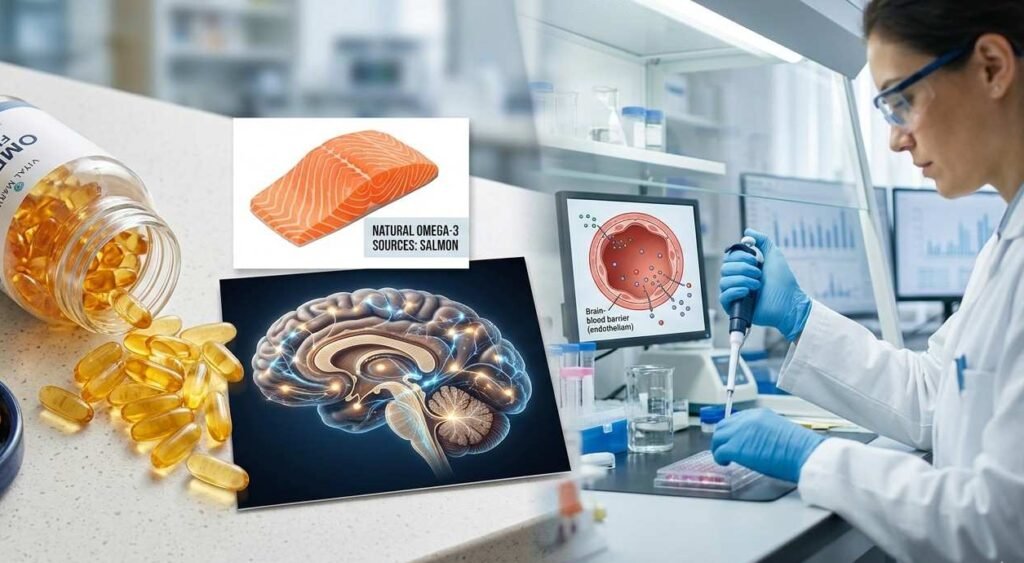
So, what does this mean for fish oil supplements? Importantly, the researchers and independent experts emphasize context. Albayram himself cautions that the data are context-dependent. As he told reporters, “We still don’t know whether the brain has resilience or resistance to this supplement. Biology is context-dependent”【2†L127-L133】【7†L160-L168】. In other words, these findings apply to a very specific scenario of repeated mild brain injury – such as athletes, military personnel, or anyone with multiple concussions. It does not mean that fish oil is universally harmful.
Dr. Dung Trinh, a neurologist not involved in the study, echoed this view. She noted that the results are “clinically important” for people with a history of repeated head trauma, because EPA “may interfere with brain vascular repair” in that group【17†L267-L270】. However, Trinh also stressed that the study does not prove fish oil causes brain damage in the general population【17†L279-L284】. For most people without such injuries, omega-3s from fish or supplements likely remain beneficial.
Another expert, nutritionist Meridan Zerner, pointed out that this was a small mouse study. She noted all mice were male and had a high dose of EPA over a long period【17†L325-L333】. Human biology and supplement use vary widely. Zerner advises, “This study is not a call for the public to abandon fish oil… If you are at elevated risk for repetitive TBIs, this research gives us reason to pause and ask more questions”【17†L325-L333】.
Bottom line: Don’t panic or quit all supplements. Instead, recognize that omega-3s might work differently depending on circumstances. If you have a history of concussions or head injuries, it could be worth discussing your fish oil regimen with a doctor – especially the EPA/DHA ratio of your supplement【17†L279-L287】. For others, traditional advice on omega-3s and brain health still largely stands.
Brain-Healthy Dietary Tips (Beyond Supplements)
Rather than relying solely on pills, many experts recommend a balanced diet rich in whole foods for brain support. Here are some practical tips:
- Eat fatty fish regularly: Aim for salmon, sardines, mackerel or trout 2–3 times per week. These provide natural sources of EPA and DHA in a food matrix【17†L307-L314】. (For example, salmon and sardines are rich in both omega-3s and other nutrients.)
- Add plant-based omega-3s: Include walnuts, flaxseeds or chia seeds in your meals or snacks. These are high in alpha-linolenic acid (ALA), a precursor to EPA/DHA【17†L311-L317】. While ALA conversion to DHA/EPA is limited, it contributes to an anti-inflammatory diet.
- Load up on fruits and vegetables: Colorful produce (berries, leafy greens, beets, cruciferous veggies) provide antioxidants and polyphenols that support blood-vessel health and reduce neuroinflammation【17†L307-L314】【17†L315-L323】.
- Follow Mediterranean/MIND diet patterns: Diets like the Mediterranean or MIND emphasize fish, olive oil, whole grains, beans, nuts, fruits and vegetables. These eating patterns supply a broad array of nutrients linked to cognitive health【17†L315-L323】.
- Stay hydrated and limit processed foods: The brain is about 73% water【17†L319-L323】, so drink plenty of fluids. Also cut back on ultra-processed foods, which can promote inflammation – the opposite of what you want for brain repair【17†L319-L323】.
These steps focus on overall brain health rather than any single pill. As one dietitian puts it, “We know omega-3s (preferably from food) support the brain’s foundation, but repair is far more complex. It’s not one nutrient — it’s the whole environment: nutrition, sleep, blood flow, and recovery”【17†L299-L307】.
Conclusion
Onder Albayram’s study offers a new perspective on fish oil and brain recovery. It indicates that high EPA intake may hamper the healing process after repeated concussions【9†L52-L59】. This challenges the simple notion that all fish oil is automatically brain-protective. However, the researchers and experts emphasize that these findings are context-specific, not a general condemnation of omega-3s【7†L159-L168】【17†L279-L287】. As Albayram notes, this work is “a starting point… that opens a new conversation about precision nutrition in neuroscience”【9†L133-L137】. In practice, the study reminds us to personalize advice: athletes or veterans with multiple head injuries should scrutinize their supplements, while others can continue following standard guidance on omega-3s.
In summary, EPA’s effects appear to depend on the situation【7†L159-L168】. Future research – including human trials – will clarify the implications. For now, a balanced approach is best: get omega-3s through foods when possible, maintain a brain-healthy diet, and consult healthcare providers for tailored recommendations. The emerging message is not “fish oil is bad,” but rather that “one size does not fit all” when it comes to supplements and brain health【7†L159-L168】【17†L279-L287】.
FAQ
Q: What did Onder Albayram’s fish oil research find?
A: Albayram’s team found that long-term supplementation with the omega-3 EPA (found in fish oil) impaired recovery in mice with repeated mild head injuries. Mice fed EPA had weakened blood-vessel repair and more tau protein buildup in the brain, leading to cognitive deficits【9†L52-L59】【7†L120-L127】. The study suggests EPA may create a “metabolic vulnerability” in the injured brain【2†L127-L133】.
Q: Does fish oil (EPA) actually harm the brain after a concussion?
A: The study indicates that EPA-rich fish oil can slow healing after repeated head trauma in mice. It disrupted vascular repair signals and increased tau pathology in that context【7†L120-L127】【2†L127-L133】. However, researchers emphasize this was in a specific model of repetitive injury. It doesn’t mean fish oil causes damage in all cases; rather, EPA’s effect depends on the situation【7†L159-L168】【17†L279-L287】.
Q: How are EPA and DHA different in brain effects?
A: DHA and EPA are both omega-3s but act differently. DHA is a major structural fat in the brain and generally supports brain health【2†L138-L142】. In Albayram’s study, DHA did not interfere with repair processes in cell tests, whereas EPA did【9†L90-L94】【16†L218-L222】. The research suggests that DHA may integrate into neurons as expected, while excess EPA can alter vascular metabolism under stress.
Q: Should people with concussions avoid all fish oil supplements?
A: Not necessarily all supplements, but caution is advised. Experts suggest those with a history of repeated head injuries (athletes, military, etc.) talk to their doctor about fish oil use, especially EPA content【17†L279-L287】. The study doesn’t prove harm for everyone. It means to evaluate supplement choices carefully – for example, using lower-EPA or more DHA-focused formulas – if you are at high risk for brain injury.
Q: What do experts recommend now about fish oil and brain health?
A: Current advice remains largely supportive of omega-3s for the general public, with added nuance. Health professionals stress not to overreact: this was an animal study in a specific setting【17†L279-L287】. They advise continuing a brain-healthy diet (rich in fatty fish, nuts, vegetables) and using fish oil sensibly. If you have frequent concussions, consult a doctor about your omega-3 regimen. Overall, they emphasize a balanced approach and more research to guide personalized nutrition strategies【17†L325-L333】【9†L133-L137】.