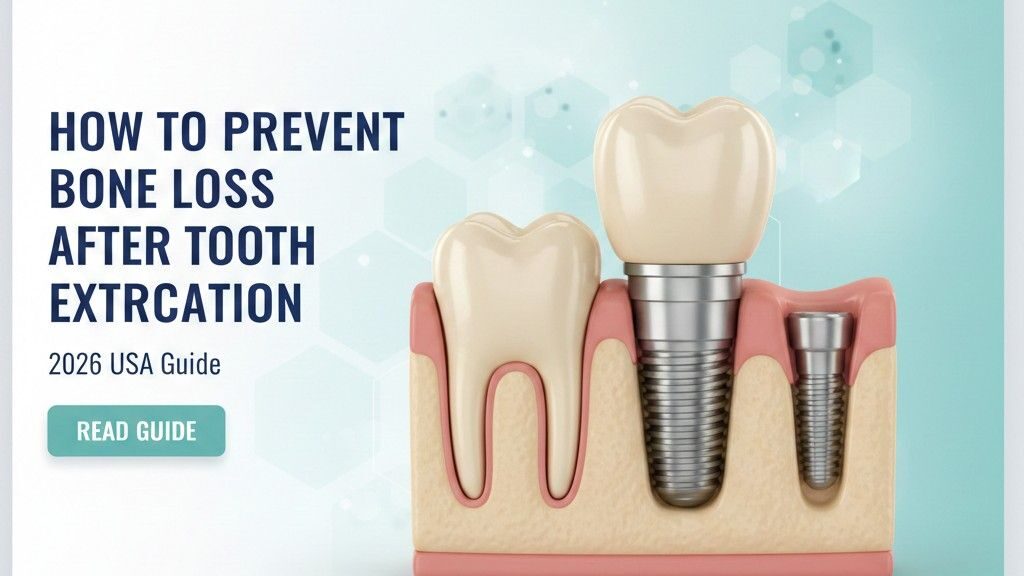
How to Prevent Bone Loss After Tooth Extraction (2026 USA Guide)
Tooth extraction solves pain or infection, but many people don’t realize what happens next. After a tooth is removed, the jawbone in that area begins to shrink. If no steps are taken, significant bone loss can occur within months.
If you’re searching how to prevent bone loss after tooth extraction, this expert 2026 guide explains what causes it, how fast it happens, and the best dentist-recommended prevention strategies in the United States.
Why Bone Loss Happens After Extraction
Your jawbone stays strong because tooth roots stimulate it during chewing. Once a tooth is removed, that stimulation stops.
According to the American Dental Association, bone resorption (shrinkage) begins almost immediately after extraction and can reduce bone width by up to 25% within the first year.
Without intervention, this can lead to:
- Facial changes
- Sunken appearance
- Shifting teeth
- Difficulty placing dental implants
How Fast Does Bone Loss Occur?
Bone loss typically:
- Begins within weeks
- Is most rapid in the first 3–6 months
- Continues gradually over time
The Centers for Disease Control and Prevention highlights that maintaining oral structure is important for long-term dental stability and overall health.
Best Ways to Prevent Bone Loss After Tooth Extraction
1. Socket Preservation (Bone Graft at Time of Extraction)
This is the most effective prevention method.
During extraction, the dentist places bone graft material into the empty socket. This:
- Maintains bone volume
- Preserves ridge shape
- Supports future implants
- Reduces collapse
This is commonly recommended in the USA when a dental implant is planned.
2. Dental Implants
Dental implants are the only tooth replacement option that stimulates bone like a natural tooth root.
Benefits include:
- Preventing bone shrinkage
- Long-term stability
- Natural chewing function
- Preserving facial structure
Placing an implant soon after extraction often minimizes bone loss.
3. Avoid Delaying Tooth Replacement
Leaving a gap for too long increases bone resorption.
Options to replace missing teeth include:
- Dental implants
- Implant-supported bridges
- Partial dentures (less effective for bone preservation)
Early action protects jaw structure.
4. Follow Proper Post-Extraction Care
Proper healing reduces complications that may worsen bone loss.
After extraction:
- Avoid smoking
- Avoid drinking through straws
- Follow soft diet
- Maintain gentle oral hygiene
- Attend follow-up visits
Smoking significantly increases bone healing complications.
5. Maintain Strong Overall Oral Health
Healthy gums and surrounding teeth support bone stability.
Daily habits should include:
- Brushing twice daily
- Flossing
- Regular dental cleanings
- Managing gum disease
Gum infections accelerate bone breakdown.
Signs Bone Loss May Be Occurring
Watch for:
- Jaw shrinking appearance
- Changes in facial profile
- Loose nearby teeth
- Difficulty fitting dentures
- Bite changes
Early dental evaluation helps limit progression.
Who Is at Higher Risk?
You may have increased risk of bone loss if you:
- Smoke
- Have gum disease
- Have diabetes
- Delay implant placement
- Have multiple extractions
Discuss risk factors with your dentist before extraction.
Is Bone Loss Reversible?
Minor early bone shrinkage is difficult to reverse naturally. However, advanced bone grafting procedures can rebuild lost bone in many cases.
These procedures are more complex and costly than prevention at the time of extraction.
USA Cost Considerations
In the United States:
- Socket preservation may cost several hundred dollars
- Dental implants are a higher investment but offer long-term protection
Preventing bone loss early is often more cost-effective than rebuilding bone later.
Conclusion
If you’re asking how to prevent bone loss after tooth extraction, the most effective solution is socket preservation or early dental implant placement.
Bone shrinkage begins quickly after a tooth is removed, especially within the first 3–6 months. Acting early protects your jaw structure, facial appearance, and long-term dental health.
Speak with your dentist before extraction about bone preservation options. Prevention today avoids complex treatment tomorrow.
FAQ
1. Does everyone lose bone after tooth extraction?
Yes, some bone shrinkage is natural without stimulation.
2. Is bone grafting necessary?
It is strongly recommended if you plan to get a dental implant.
3. How soon should I replace a missing tooth?
Ideally within a few months to minimize bone loss.
4. Can dentures prevent bone loss?
No. Dentures do not stimulate bone like implants.
5. Is bone loss painful?
Not usually, but it can cause structural and cosmetic changes over time.