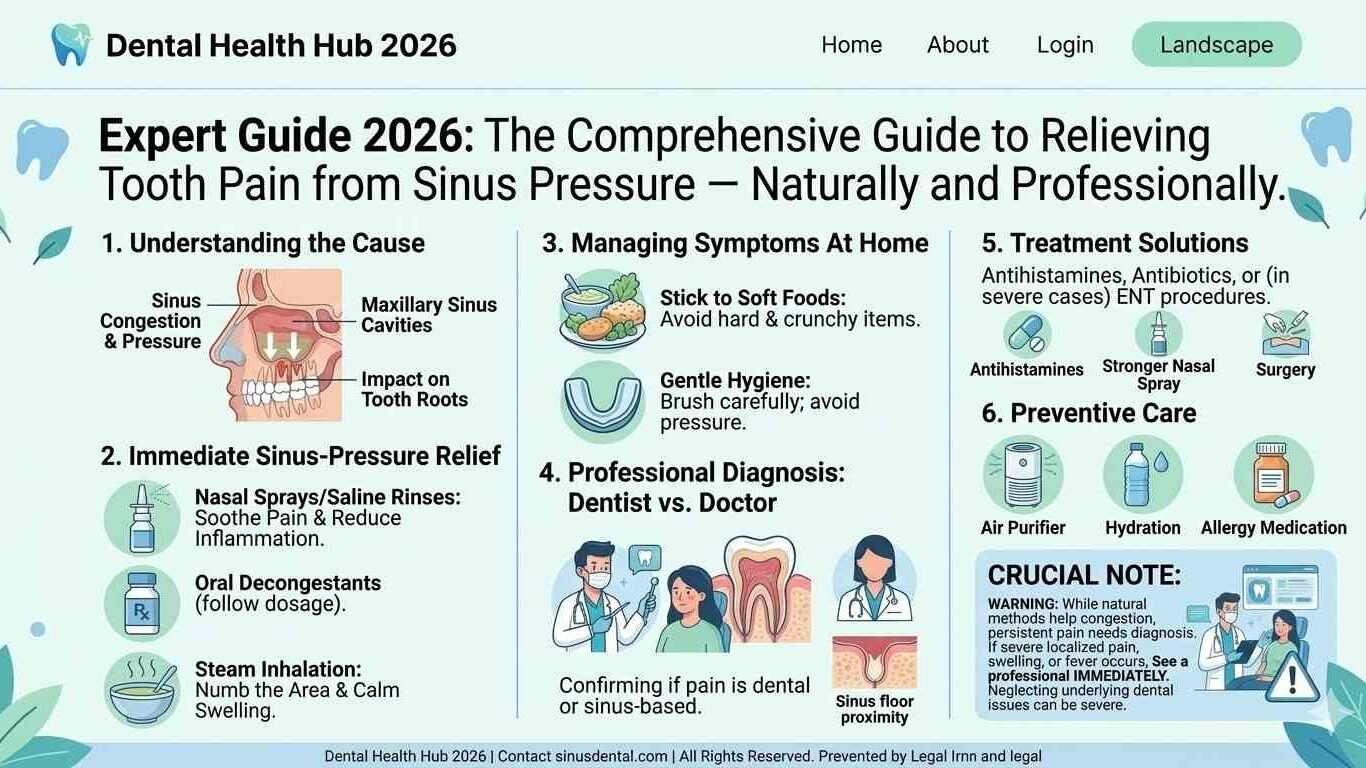
How to Relieve Tooth Pain from Sinus Pressure – Expert Guide
Key Takeaways
- Sinus pressure can cause tooth pain because sinus cavities sit close to upper molar roots.
- Treating the sinus inflammation often relieves dental discomfort.
- Safe remedies include steam inhalation, saline rinses, and pain relievers.
- Persistent pain may require evaluation by a dentist or physician.
- Ignoring symptoms can lead to complications if infection is involved.
Understanding Tooth Pain Caused by Sinus Pressure
Tooth pain can sometimes originate outside the tooth itself. When sinus cavities become inflamed or congested, they can press against the roots of the upper teeth and create discomfort that feels like a dental problem.
Many patients searching how to relieve tooth pain from sinus pressure are surprised to learn that their teeth may actually be healthy. Instead, sinus inflammation — often caused by allergies, colds, or sinus infections — creates pressure that radiates into nearby teeth.
In clinical practice, dentists frequently see patients who believe they have a cavity or cracked tooth, only to discover that sinus congestion is the real cause. The upper molars are most commonly affected because their roots sit close to the maxillary sinus cavity.
Understanding the difference between sinus-related tooth pain and true dental pain is important for choosing the right treatment and avoiding unnecessary dental procedures.
What Causes Tooth Pain from Sinus Pressure?
Sinus-related dental pain occurs when the maxillary sinuses become inflamed and swollen.
Common triggers include:
- Sinus infections (sinusitis)
- Seasonal allergies
- The common cold
- Nasal congestion
- Changes in air pressure
- Upper respiratory infections
When inflammation develops, pressure builds inside the sinus cavity. Because the roots of the upper molars sit close to these sinuses, that pressure can push downward and cause aching teeth.
Dentists commonly observe that sinus-related pain often affects multiple upper teeth at once, rather than a single tooth.
Symptoms That Suggest Sinus Tooth Pain
A quick answer: Sinus-related tooth pain usually occurs alongside congestion, facial pressure, and discomfort in several upper teeth.
Typical symptoms include:
- Pain in upper molars or premolars
- Pressure in cheeks or forehead
- Nasal congestion
- Headache
- Pain that worsens when bending forward
- Tenderness around the eyes or nose
Unlike cavity pain, sinus tooth pain often comes and goes depending on sinus pressure levels.
How to Relieve Tooth Pain from Sinus Pressure at Home
If sinus inflammation is the cause, reducing sinus pressure can significantly improve tooth discomfort.
1. Steam Inhalation
Steam helps loosen mucus and reduce sinus congestion.
How to do it:
- Fill a bowl with hot water
- Lean over the steam with a towel over your head
- Inhale for 10–15 minutes
This method helps open sinus passages and relieve pressure around the teeth.
2. Saline Nasal Rinse
A saline rinse flushes irritants and mucus from the nasal passages.
Benefits include:
- Reduced sinus inflammation
- Improved drainage
- Less pressure on tooth roots
Many patients report noticeable relief after regular saline rinsing.
3. Over-the-Counter Pain Relievers
Common medications include:
- Acetaminophen
- Ibuprofen
These medications help reduce inflammation and relieve pain while the sinus condition improves.
Always follow dosage instructions and consult a healthcare professional if symptoms persist.
4. Warm Compress
Applying a warm compress to the cheeks can help reduce sinus pressure.
Steps:
- Place a warm towel on the face
- Hold for 10–15 minutes
- Repeat several times daily
This improves sinus drainage and eases discomfort.
5. Stay Hydrated
Drinking plenty of fluids helps thin mucus and supports sinus drainage.
Helpful options include:
- Water
- Warm tea
- Clear soups
Proper hydration often reduces sinus congestion faster.
Professional Treatment Options
If home care does not resolve symptoms, medical treatment may be required.
Dentists and physicians typically evaluate whether the pain originates from sinus inflammation or a true dental condition.
Common treatments include:
| Treatment | Purpose | When Used |
|---|---|---|
| Decongestants | Reduce sinus swelling | Short-term relief |
| Nasal steroid sprays | Control inflammation | Allergy-related sinusitis |
| Antibiotics | Treat bacterial infection | Severe sinus infection |
| Dental evaluation | Rule out tooth problems | Persistent tooth pain |
In clinical practice, physicians often treat the sinus condition first before recommending dental procedures.
When to See a Dentist
You should seek professional evaluation if:
- Pain lasts longer than 5–7 days
- Only one tooth hurts intensely
- Tooth pain occurs without sinus symptoms
- You notice swelling in the gums
- Fever develops
Dentists commonly evaluate for conditions such as cavities, cracked teeth, or infections that can mimic sinus pain.
Risks of Ignoring Sinus-Related Tooth Pain
While sinus pressure often resolves with treatment, persistent symptoms should not be ignored.
Possible complications include:
- Chronic sinus infections
- Worsening inflammation
- Misdiagnosed dental issues
- Untreated tooth infections
Early evaluation helps ensure the correct cause is treated.
Prevention Tips
Many sinus-related dental pain episodes can be prevented with good sinus care.
Helpful habits include:
- Managing seasonal allergies
- Using humidifiers during dry seasons
- Staying hydrated
- Treating colds early
- Practicing good oral hygiene
Dentists often remind patients that healthy teeth and healthy sinuses work together to maintain comfort.
Special Considerations
Pregnancy
Pregnancy can increase nasal congestion due to hormonal changes. Pregnant patients should consult their healthcare provider before taking medications.
Children
Children may struggle to describe sinus pressure. Persistent tooth complaints should always be evaluated by a pediatric dentist or physician.
People with Allergies
Chronic allergies are a major contributor to sinus-related tooth pain. Managing allergies can significantly reduce recurring symptoms.
FAQ Section
Can sinus pressure really cause tooth pain?
Yes. The roots of upper molars sit close to the maxillary sinuses, so inflammation can create pressure that feels like tooth pain.
Dentists often confirm this by checking whether several upper teeth hurt together and whether sinus symptoms are also present.
How long does sinus tooth pain last?
Sinus-related tooth pain typically lasts a few days to a week.
Once sinus congestion improves, the pressure on tooth roots decreases and the pain usually fades. Persistent pain should be evaluated by a dentist.
How can I tell if my tooth pain is sinus or a cavity?
Sinus pain often affects multiple upper teeth and worsens when bending forward.
A cavity usually causes pain in one specific tooth and may worsen with cold, sweets, or biting pressure.
Do I need a root canal for sinus tooth pain?
Usually not.
If the pain is caused by sinus pressure rather than tooth infection, treating the sinus condition typically resolves the discomfort without dental procedures.
Does bending over make sinus tooth pain worse?
Yes. Bending forward increases sinus pressure, which can push on tooth roots and intensify discomfort.
This symptom is a common indicator that sinus inflammation is involved.
Conclusion
Understanding how to relieve tooth pain from sinus pressure begins with identifying the true cause of the discomfort. Because the upper teeth sit close to the sinus cavities, inflammation in the sinuses can create pain that mimics a dental problem.
In many cases, relieving sinus congestion through steam inhalation, saline rinses, hydration, and anti-inflammatory medication can significantly reduce the pressure and ease tooth pain. However, persistent or severe symptoms should always be evaluated by a licensed dentist or healthcare professional.
Prompt evaluation ensures that sinus infections, cavities, or other dental conditions are properly diagnosed and treated. Taking early action helps protect both sinus health and long-term dental comfort.
Just tell me.