Language barriers can make communication difficult, especially when you need to understand or write something in another language. Spanish is one of the most widely spoken languages in the world, so being able to translate English into Spanish can be useful for students, travelers, professionals, businesses, and everyday users.
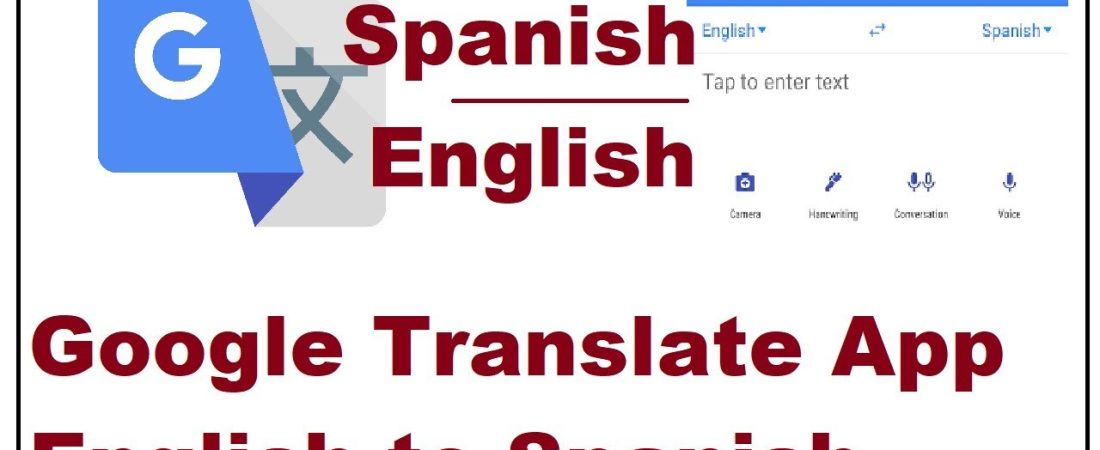
Google Translate English to Spanish is one of the easiest ways to translate words, sentences, and longer pieces of text between the two languages. The service provides a simple interface where users can enter English text and receive a Spanish translation within seconds.
However, getting a translation is only part of the process. Understanding how to use the tool effectively can help you get more useful and natural results.
What Is Google Translate?
Google Translate is an online translation service designed to help users convert text between different languages. It supports a large number of languages and offers several translation methods, including typed text, voice input, images, and website translation.
For English and Spanish, the tool can be particularly useful because both languages are widely supported and commonly used for international communication.
When using Google Translate English to Spanish, you enter English as the source language and select Spanish as the target language. The system then analyzes the text and provides a Spanish translation.
The basic process is simple, making the service accessible brasssmile com even to people who have little experience with translation tools.
How to Use Google Translate English to Spanish
Using Google Translate for English-to-Spanish translation generally requires only a few steps.
First, open Google Translate through its website or mobile application. Select English as the language you want to translate from and Spanish as the language you want to translate into.
Next, type or paste your English text into the source box. The translated Spanish text should appear in the target-language section.
For example, if you enter:
“Where is the nearest hotel?”
The Spanish translation can be:
“¿Dónde está el hotel más cercano?”
You can then copy the translated text or use other available options depending on your device.
This straightforward process makes English to Spanish translation convenient for quick communication.
Why Use Google Translate for English to Spanish?
There are several reasons people use Google Translate when they need a fast translation.
Fast Results
One of the biggest advantages is speed. Instead of translating every word manually, users can enter a complete sentence and receive a translation almost immediately.
This is useful when you need to understand a message, menu, website, email, or short document quickly.
Easy to Use
The interface is designed for everyday users. You do not need specialized translation knowledge to use it.
Simply choose English and Spanish, enter your text, and review the result.
Useful for Everyday Communication
Travelers can use an English Spanish translator to communicate while visiting Spanish-speaking countries. Students can use translation tools to understand unfamiliar words, while businesses can use them for basic communication with Spanish-speaking customers.
Supports Different Input Methods
Depending on the platform and available features, Google Translate can work with typed text, speech, images, and other forms of input. This can make translation more convenient in different situations.
Translating English Words Into Spanish
For individual words, Google Translate can be very helpful.
For example:
- House → Casa
- Book → Libro
- Water → Agua
- School → Escuela
- Friend → Amigo
- Family → Familia
- Food → Comida
- Travel → Viajar
Simple words often have straightforward translations. However, the correct translation can sometimes depend on context.
A single English word may have several meanings, and the appropriate Spanish word can change depending on how the word is being used.
For this reason, users should consider the entire sentence rather than translating isolated words whenever possible.
Translating English Sentences Into Spanish
Sentence-level translation provides more context than translating individual words.
For example:
“I am going to the store.”
can be translated into Spanish as:
“Voy a la tienda.”
Similarly:
“I would like to order some food.”
can be translated as:
“Me gustaría pedir algo de comida.”
The exact wording can vary depending on context, regional preferences, and the intended meaning.
This is why it is important to review translations rather than automatically assuming that every generated sentence is perfect for every situation.
Google Translate Spanish: Understanding Context
One of the most important factors in translation is context.
English and Spanish do not always follow identical grammatical structures. A direct word-for-word translation may sound unnatural even when the individual words are technically correct.
For example, English expressions, idioms, humor, and informal phrases can be difficult to translate perfectly.
If you are translating a sentence for casual communication, the result may be perfectly understandable. But if the translation is intended for a business document, academic assignment, legal material, or professional publication, additional proofreading may be necessary.
English to Spanish Translation for Travel
Travel is one of the most common situations where people use translation tools.
If you are traveling to Spain, Mexico, Argentina, Colombia, or another Spanish-speaking destination, Google Translate can help with basic communication.
You may need to translate:
- Hotel information
- Restaurant menus
- Transportation instructions
- Directions
- Shopping questions
- Emergency phrases
- Tourist information
- Basic conversations
For example:
“Can you help me find the train station?”
can be translated into Spanish as:
“¿Puede ayudarme a encontrar la estación de tren?”
Having a translation tool available can make unfamiliar situations easier to manage.
Using Google Translate for Learning Spanish
Google Translate can also be useful for language learners.
Students learning Spanish can compare English sentences with their Spanish translations. This may help them recognize vocabulary, sentence patterns, and common expressions.
However, translation tools should be used as a learning aid rather than as a complete replacement for studying Spanish grammar and vocabulary.
Learners should pay attention to how sentences are structured instead of simply copying translations.
For example, when translating an English sentence into Spanish, compare the placement of nouns, verbs, adjectives, and pronouns. Over time, this can help improve your understanding of Spanish.
Common Problems With Machine Translation
Although online translation tools are useful, they are not perfect.
One common issue is ambiguity. Some English words have multiple meanings, and a translation system may select the wrong meaning when there is not enough context.
Another issue is idiomatic language. Expressions that make perfect sense in English may not have a direct Spanish equivalent.
Tone can also be difficult. A sentence intended to sound friendly, formal, humorous, or sarcastic may not carry exactly the same tone after automatic translation.
For important content, users should always review the translation carefully.
Tips for Better English to Spanish Translations
You can improve translation results by following a few simple practices.
Use Complete Sentences
Instead of entering isolated words, provide enough context to explain what you mean.
Keep the Original Text Clear
Poor grammar, spelling mistakes, and confusing sentence structures can affect translation quality.
Avoid Excessive Slang
Local slang and highly informal expressions may not translate naturally.
Review the Spanish Result
Read the translated text carefully and check whether it expresses the meaning you intended.
Consider Your Audience
Spanish varies across regions. The Spanish used in Spain may differ from expressions commonly used in Mexico, Argentina, Colombia, and other Spanish-speaking countries.
Google Translate English to Spanish for Businesses
Businesses that communicate with Spanish-speaking customers can use translation tools for basic tasks.
For example, companies may need to understand customer messages, translate short product descriptions, communicate with international clients, or prepare basic bilingual content.
However, professional businesses should be more careful when translating important documents.
Marketing campaigns, contracts, legal information, technical documentation, and official communications may require professional human translation to ensure accuracy and appropriate terminology.
Can Google Translate Replace a Human Translator?
For quick and simple translations, Google Translate can be extremely useful. However, it does not always replace professional human translators.
Human translators can understand context, cultural differences, tone, humor, industry terminology, and subtle meanings more effectively.
For example, a simple sentence for travel may not require professional translation. In contrast, a legal contract or medical document should be handled with much greater care.
The best choice depends on the importance and complexity of the material.
Google Translate on Mobile Devices
Mobile translation can be especially useful when traveling or communicating away from a computer.
Users can enter text through their phone and, where supported, use additional input methods such as voice or image-based translation.
This makes it possible to translate signs, menus, messages, and short conversations in practical situations.
Before traveling, users should become familiar with the app and make sure they know how to access the features they need.
English Spanish Translator for Everyday Use
An English Spanish translator can be useful for many everyday situations.
A student might translate a Spanish message from a classmate. A traveler might translate a restaurant menu. An online shopper might need to understand product information. A business owner might communicate with Spanish-speaking customers.
Because these situations are usually quick and straightforward, an automated translation tool can save considerable time.
Still, users should remember that translation quality depends on the text, context, and intended meaning.
Frequently Asked Questions
Is Google Translate English to Spanish free?
Google Translate provides free translation features for common translation needs. Availability of specific features can vary by platform and region.
Can Google Translate translate complete English sentences?
Yes. Users can enter complete English sentences and receive Spanish translations. Providing sufficient context can help produce more useful results.
Is Google Translate accurate for Spanish?
It can provide useful translations, particularly for common words and straightforward sentences. Accuracy can vary with context, slang, technical terminology, and complex language.
Can I use Google Translate while traveling?
Yes. Translation tools can be useful for travel-related communication, including menus, directions, signs, and basic conversations.
Should I use Google Translate for professional documents?
For important professional, legal, financial, medical, or technical documents, professional proofreading or human translation is recommended because small errors can have significant consequences.
Final Thoughts
Google Translate English to Spanish is a convenient solution for people who need quick translations between English and Spanish. Its simple interface and broad range of features make it useful for travel, education, communication, and everyday tasks.
For basic words, sentences, and casual communication, it can save time and make language barriers easier to overcome. However, translation should always be reviewed when accuracy, tone, or cultural meaning is important.
The best results come from providing clear context, checking the translated Spanish text, and choosing professional translation when the content requires a high level of accuracy read more about on sparkpressfusion com